How to Start a Career in Motorsports — By 16-Year-Old F4 Driver Ana Palestro
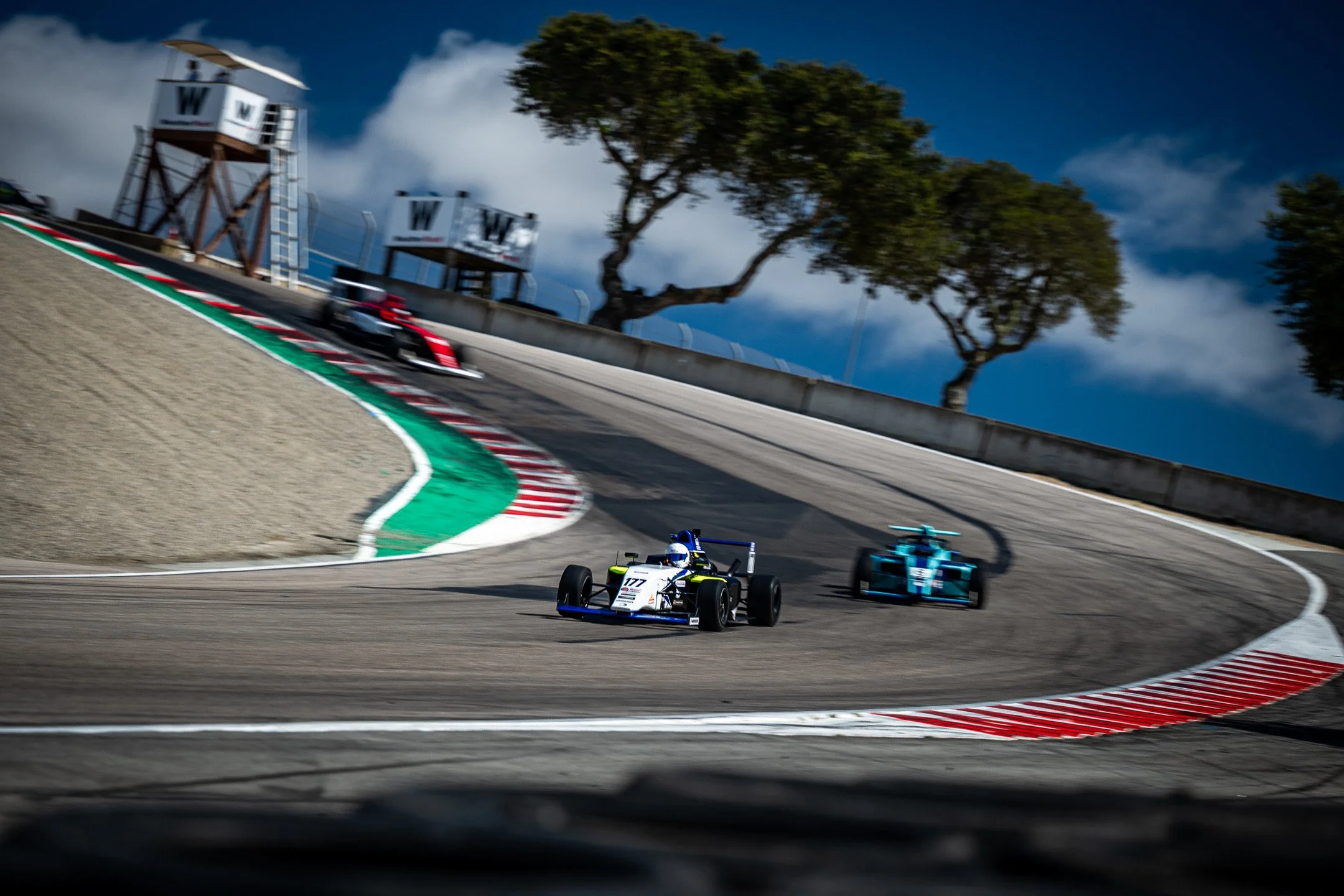
Ana Palestro driving car # 177 during a qualifying session at Laguna Seca
Introduction
Motorsports is a business and in the long run, you should consider racing in the car the reward for being successful in that business. It is hard work, 7 days a week, on and off the track. For every hour I am in the car, I spend many many more hours working on everything else. This includes studying science and strategy, practicing on the simulator, and getting involved with motorsport organizations every chance I can. At this stage in my career, it also includes pursuing opportunities for sponsor partnerships.
Getting Started
Until a few years ago the only path to racing cars was through a childhood career in go-karting (i.e., karting). That is no longer true. If you are old enough, it is possible to start in a car - such as the Formula 4 car you see in the photo above. I did a little recreational karting, but because I was already 14, my parents and I decided I should move right into cars. Sim Racing is another option, and I have had teammates who started as successful sim racers and then quickly excelled on the real-life track. Finally, your teacher and coach can make or break your experience. Not all teams are created equal, and it is important to find a team and coach who are a good match for you. Some teams are focused on teaching kids from the ground up and others are focused on competing. Start by asking around, researching online, and discovering who has taught already-successful drivers early in their careers.
Ana Palestro resting between sessions at K1 Circuit in California.
Physical Demands
Race car drivers are athletes. Driving a Formula 4 car, for example, is very physically demanding. Unlike in road cars, you experience strong G-forces, and you are tightly strapped into the car so you feel every vibration during high-speed corners and heavy braking. Many drivers spend hours in the gym doing specialized workouts. The brake pedal also requires immense pressure to slow the car down effectively—it’s like performing a heavy leg press every corner throughout the race. Likewise, you must build endurance, or on race days you’ll experience physical fatigue which can lead to slow lap times, judgement errors, and even accidents.
Ana Palestro during a physical training session focused on increasing strength
Learning Science and Strategy
When I first started racing, I knew very little. But I had to learn quickly. My team at the time combined science and race engineering concepts as the foundation of their program. As time went on, and I gained more confidence in the car, we focused more heavily on braking, throttle, and shifting techniques. Every moment between on-track sessions was filled with learning. I had homework assignments in between test days. We had team lessons in preparation for upcoming events. Once it was taught I was expected to know it. A great example of this growth happened at Laguna Seca, where I managed to shave 6.3 seconds off my qualifying lap time compared to last year. Having a better understanding of the car’s physics and additional time to learn new and better driving techniques made all the difference.
Ana Palestro reviewing telemetry data as part of a post-race debrief with her team’s engineer
The Mental Game
Racing requires mental endurance and extreme focus. Even then, not every day at the track goes the way you want it to. I’ve had a few tough days: being sick on a race day, making errors where the strategy I planned just didn’t work out, mechanical problems, and even an accident. I had to accept that these things happen to everyone, especially when you are learning. More importantly, I had to move on and keep going. One of my proudest days was a race at Laguna Seca. I misjudged grip in T5, and I spun. That meant I fell to last place. I could’ve given up, but I didn't. I got back on the track, 16 seconds behind the leader. In about 8 laps, I shrunk the gap to 3 seconds. It took drive, and it took extreme focus, and a desire to win. I finished P2 that day, and for me it’s my most memorable performance to date.
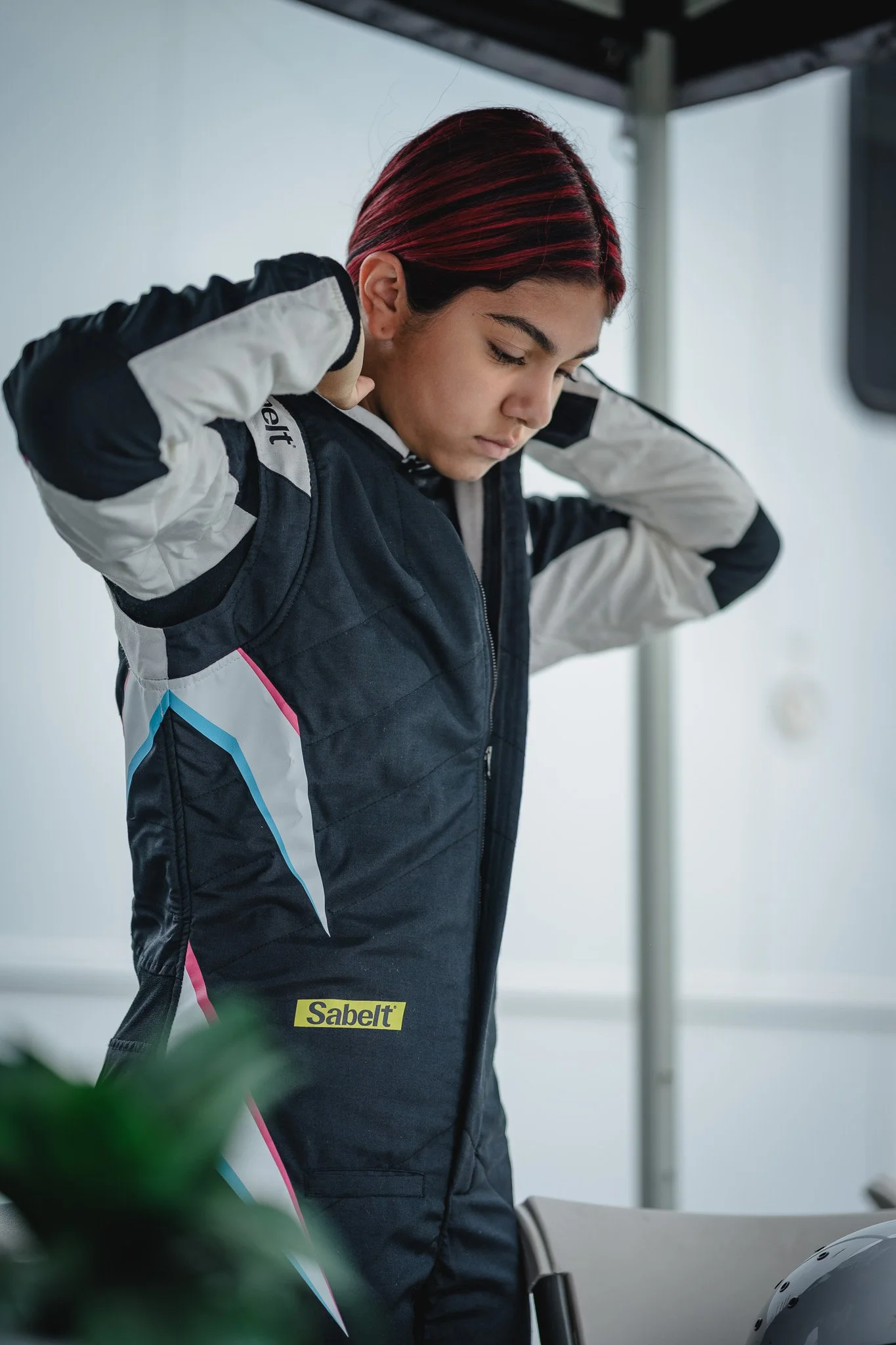
Ana Palestro, focused and thinking - while undergoing last minute safety checks before heading the the grid
Teamwork and Culture
To be successful you have to figure out how to work and communicate with people. You are constantly collaborating with mechanics and engineers, and you must speak the same racing language. You also have to be able to translate what you feel in the car into feedback they can actually use to improve the car and the strategy for the next session. That is harder than it sounds when you are just getting started - but very quickly it is expected of you. Finally, motorsports is a culture, and every team also has its own culture. Being able to adapt gives you a better chance of having a successful time with the team.
Ana Palestro with fellow drivers and members of the Kiwi Motorsport team in between race sessions
Racing is a Family Sport
Even though only one person is actually in the car, racing is not a one-person sport. It takes your whole family to make it happen. That commitment shows up in a few different ways.
The first is financial. Racing isn't cheap, between the equipment, travel, and race weekends, it adds up fast, and that cost falls on your family, not just you.
The second is time. Race weekends aren't just one day. There's travel, practice, qualifying, and the race itself, and that's on top of training during the week. My parents plan their schedules around racing just as much as I do.
The third is sacrifice. If you're racing, you're probably missing school now and then. Your parents are taking days off work to be there with you. Vacations and weekends get built around the racing calendar instead of the other way around. None of that is something I could do on my own. My family is doing this with me, even though I'm the one behind the wheel.
Ana Palestro with family after a WRS win at Sonoma Raceway
Conclusion
Ultimately, it’s demanding, but honestly, it’s the coolest thing I’ve ever done. Hopefully, after reading this, you are both excited and prepared to pursue your own dream of being a racecar driver!
Ana Palestro celebrates a Win at Laguna Seca